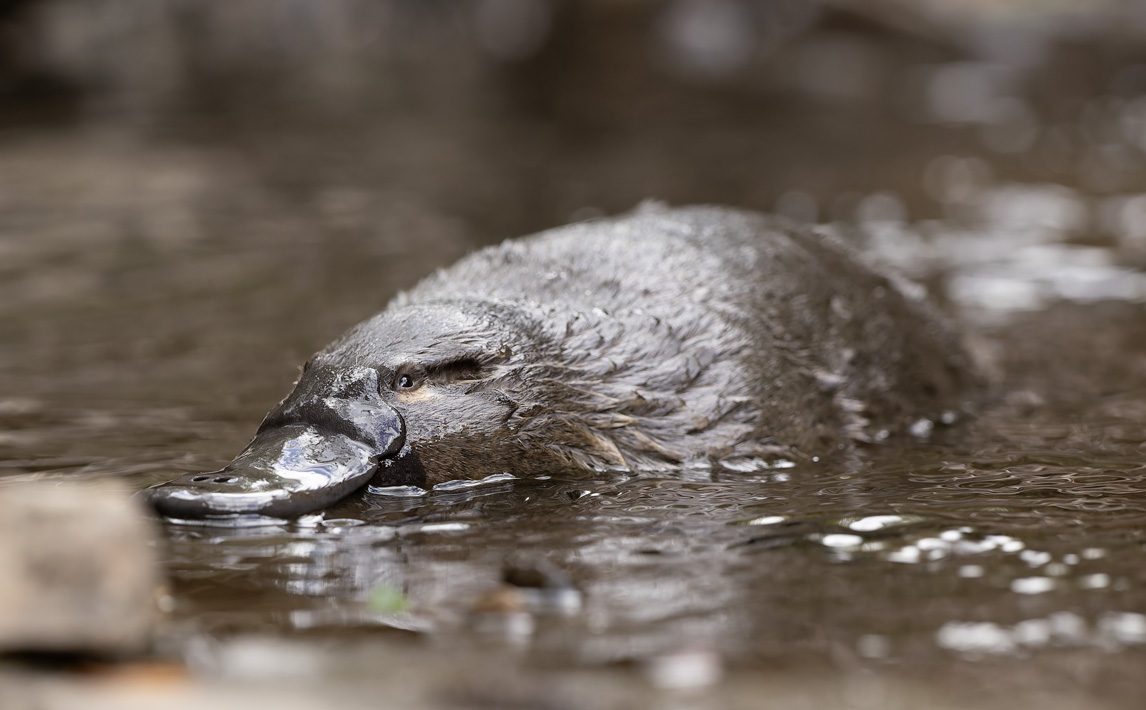
After being absent for more than 50 years from Royal National Park, an area inland from the eastern coastline of Australia that lies just south of Sydney, scientists from UNSW have confirmed the reintroduced platypus population has grown to 20 known individuals, twice the number of platypus (Ornithorhynchus anatinus) that were originally translocated to the Park in May 2023.
Gilad Bino, lead researcher and Associate Professor from UNSW’s Centre for Ecosystem Science, and co-founder of the Platypus Conservation Initiative, said the number was a defining moment for the program.
“It’s a privilege to be part of bringing platypuses back to a part of their former range where they’d been missing for generations,” he said.
A third translocation for the project was carried out in May this year by the PCI team – established in 2016 for the purpose of reducing the risk of extinction to platypuses through scientific research, improved management, and increased awareness – that oversaw the release of four platypuses into the Hacking River, two males, and two females. Their release coincided with comprehensive surveys during which the scientists re-encountered two males from the founding 2023 cohort. One was confirmed as the father of the first juvenile to be born in the Park, while the capture of a new sub-adult male – hatched during the most recent breeding season – provided further evidence the reintroduced population is reproducing and recruiting young animals into the wild.
“To capture males from the original release, still in great condition, alongside a young male hatched here in the Park, tells us this is no longer just a reintroduction, it’s a recovering population, and the addition of four more animals will strengthen both the numbers and the genetic diversity underpinning its long-term resilience,” Bino said.
All the released animals carry a small transmitter, so researchers can follow their movements as the platypuses settle into their new home. The four new monotremes were sourced from healthy populations in NSW and underwent health checks, assessment and transmitter fitting before their release.
Visitors to the Park are now reporting platypus sightings along the Hacking River, something that Bino said had not been possible in living memory, and that was one of the most rewarding outcomes of the project.
The project’s co-lead Tahneal Hawke, Senior Research Associate at UNSW’s Centre for Ecosystem Science, said the latest surveys provided strong evidence that the population was establishing across generations, with results that researchers had hoped to see at this stage of the project.
“We now have multiple age classes in the Park, evidence of breeding across consecutive seasons, and animals interacting with the river system as a healthy platypus community should. That’s the signature of a population that’s starting to stand on its own,” she said.
The reintroduction of platypuses to RNP remains the first successful platypus translocation in NSW and one of the most ambitious wildlife recovery projects ever undertaken in the state.
Each new translocation is carefully planned to complement the current population within the Park and is designed to boost their number and broaden the gene pool without compromising the source populations the animals had come from.
The PCI will continue to monitor survival, movements and breeding outcomes in the coming months and years.
Anne Layton-Bennett