
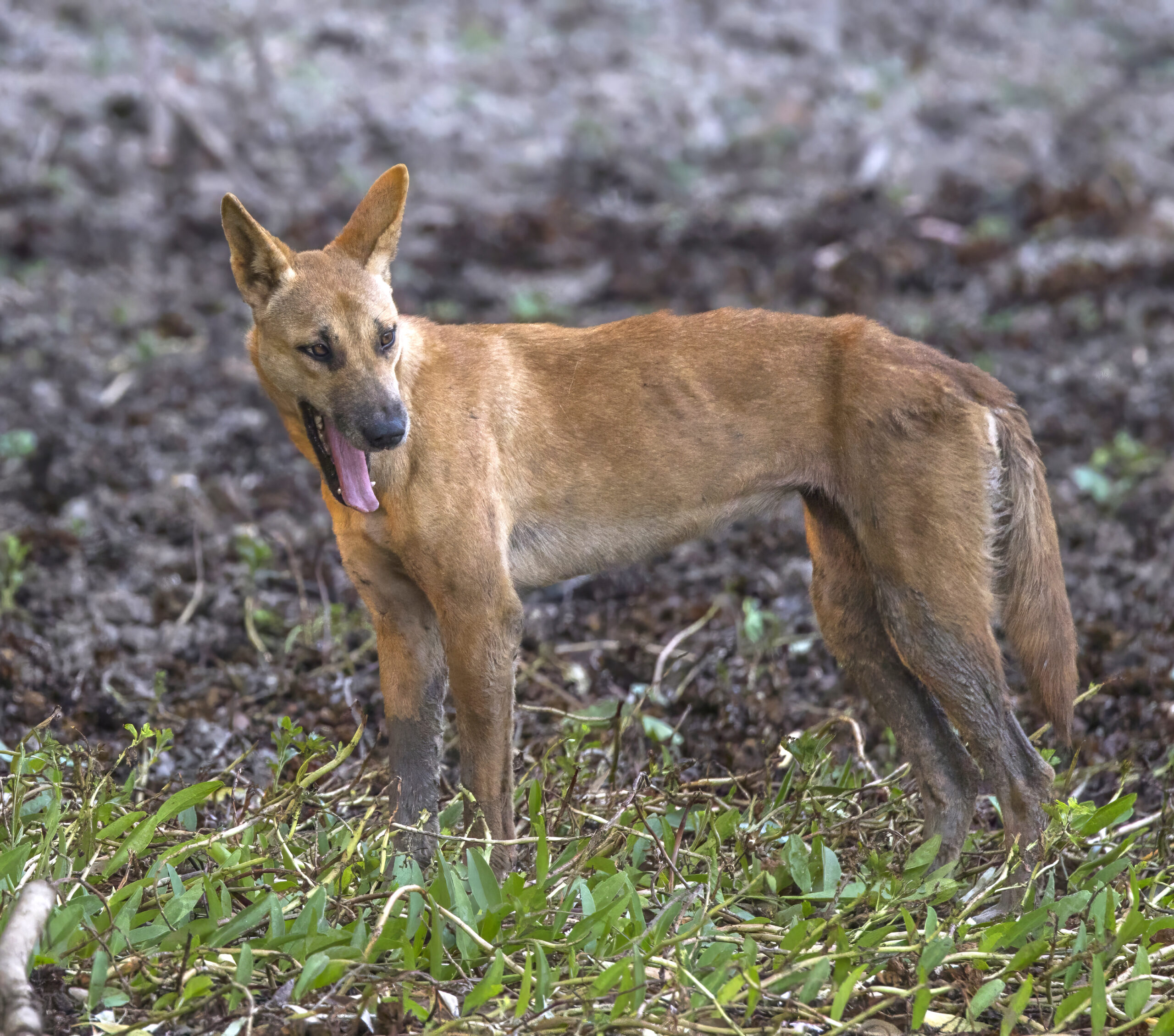
Despite dingoes playing a unique ecological role as an apex predator, and being culturally significant for many Indigenous communities, their relationship with farmers since European settlement has been controversial and calls for an introduction to manage their numbers included culling. Interbreeding with domestic dogs also blurred the lines of accurate dingo classification. It was use of terms such as ‘wild dogs’ or ‘feral dogs’ that prompted the development of a new genetic test by researchers from Adelaide University, designed to better define dingo ancestry and help prevent the loss of the species’ genetic diversity.
The study conducted collaboratively with the Australian Centre for Ancient DNA, was published recently in the journal Conservation Letters. Scientists used pre-colonial dingo DNA as a true reference to establish how much domestic dog ancestry is carried by free-roaming dingoes. The findings offer major implications for the species’ conservation management, and how dingoes are classified.
The researchers analysed more than 300 free-roaming canines across Australia and found that, on average, only 11.7 per cent of their DNA came from domestic dogs. The new testing technique remained accurate with few DNA markers making affordable, large-scale ancestry screening feasible for the first time.
Senior author Yassine Souilmi, a National Health and Medical Research Council Grant-funded Research Fellow at AU’s School of Biological Sciences, and Group Leader for Genomics and Bioinfomatics at the ACAD said the ‘wild dog’ label hid important biological and cultural differences because a predominantly dingo individual was very different to a stray domestic dog.
“The future management of dingoes should be regionally informed, and developed in close partnership with Indigenous Australian communities, for whom dingoes have been companions and kin for thousands of years,” he said.
The study also established that Australia’s dingoes had eight genetically distinct populations, including two previously undescribed groups in northern and central Australia. After accounting for domestic dog ancestry, southeastern populations were found to be much less genetically diverse than those in the north and centre, with the Mallee or Big desert dingoes of northwestern Victoria standing out as having lower ancestral diversity than the small, isolated K’gari population on Fraser Island.
The research also confirmed earlier work that showed gene flow from European dogs into dingoes peaked in the mid-20th century, especially the 1960s, coinciding with rapid post-war population growth and farming intensification in southeastern Australia.
Anne Layton-Bennett
