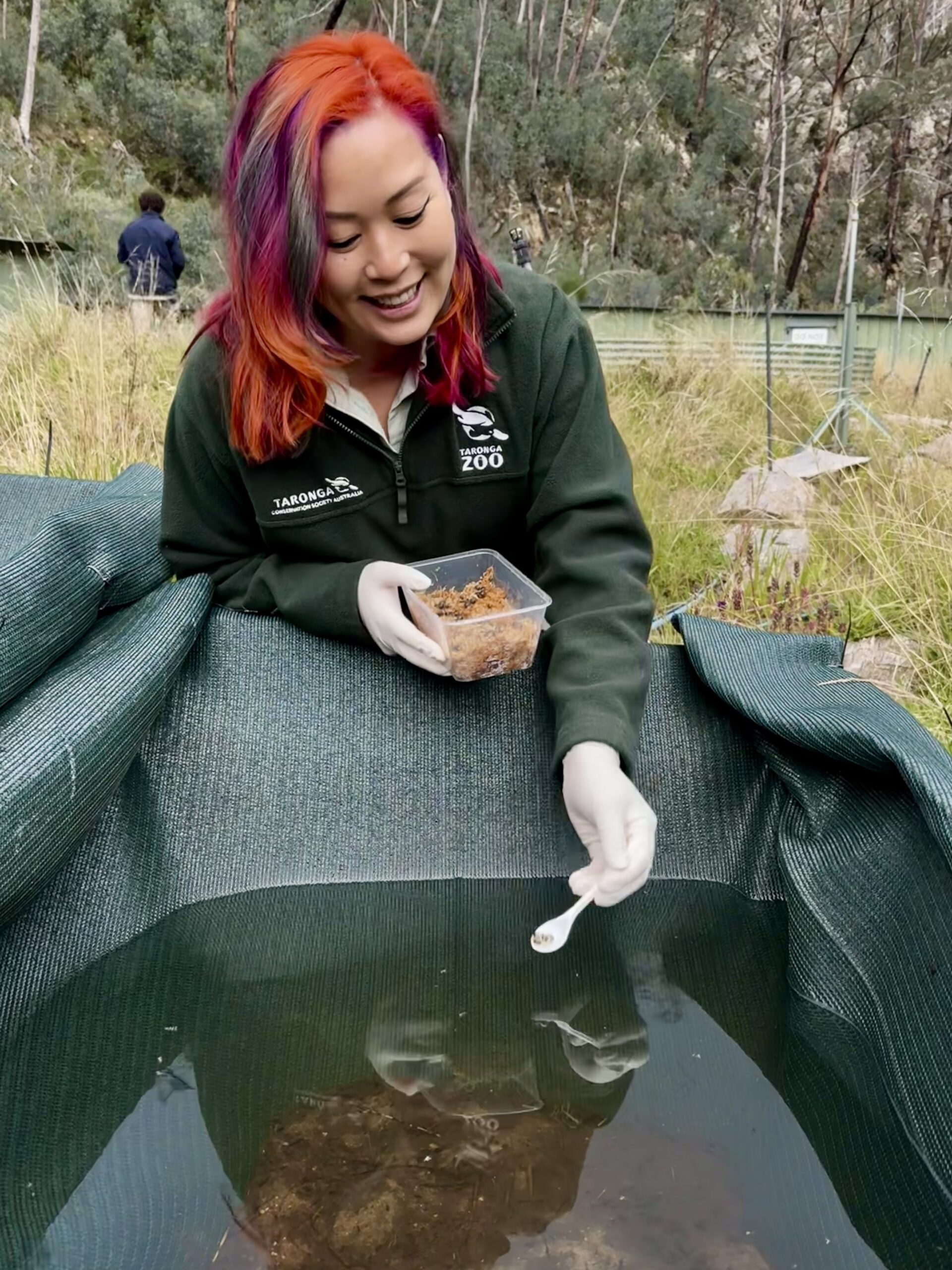
Two decades of intensive ex situ conservation work by Taronga Conservation Society Australia has been marked by the group’s release of its largest-ever cohort of southern corroboree frog (Pseudophryne corroboree) eggs into subalpine habitat within Kosciuszko National Park.
A total of 1,450 eggs, propagated under biosecure conditions at Taronga Zoo Sydney, were translocated to targeted sphagnum bog ecosystems near Mount Kosciuszko.
The translocation represents a key milestone for the species, which remains on the brink of extinction due to catastrophic population declines driven primarily by amphibian chytrid fungus (Batrachochytrium dendrobatidis) and cumulative climatic stress.
Wild estimates suggest fewer than 50 mature individuals persist outside of disease-free, managed containment enclosures across their historic range in the Snowy Mountains.
The ongoing recovery initiative is led by the NSW Government’s Saving Our Species program, operating in partnership with the NSW National Parks and Wildlife Service, Taronga Conservation Society, and Zoos Victoria.
To achieve successful breeding yields, parent stocks are maintained within specialised, temperature-controlled quarantine facilities that replicate the precise seasonal and thermal requirements of the subalpine species while ensuring strict biosecurity against chytridiomycosis.
Michael McFadden, Wildlife Conservation Officer and herpetofauna specialist at Taronga, has been involved with the recovery framework since its inception 20 years ago. He emphasized that intensive conservation breeding remains essential to preventing the total loss of the species in the wild.
“Twenty years ago, the future for this frog looked incredibly bleak,” McFadden said. “Today, with thanks to science, collaboration and persistence, we are returning record numbers of eggs to the wild to give this species the best possible chance of recovery.”
Following transportation to high-altitude sites, the translocated eggs are placed directly into natural nest burrows within moist sphagnum bogs, where they undergo autumn development before overwintering and hatching during spring snowmelts.
Once widespread across the subalpine landscapes of southern New South Wales, P. corroboree populations crashed precipitously following the introduction and spread of B. dendrobatidis across eastern Australia during the 1970s.
Today, the species is classified as critically endangered and is regarded as one of Australia’s most imperilled vertebrate taxa.
Alongside large-scale egg translocations, the overarching recovery program integrates field epidemiology, biobanking, disease-resistance research, and habitat protection to build long-term population resilience.
McFadden noted that while two decades of managed breeding have prevented imminent extinction, long-term persistence relies on continued multidisciplinary intervention.
“This species is a symbol of what’s at stake for Australia’s wildlife if we do not act,” McFadden added. “Reaching 20 years of conservation effort is something to celebrate, but it’s also a reminder that our work is far from finished.”