
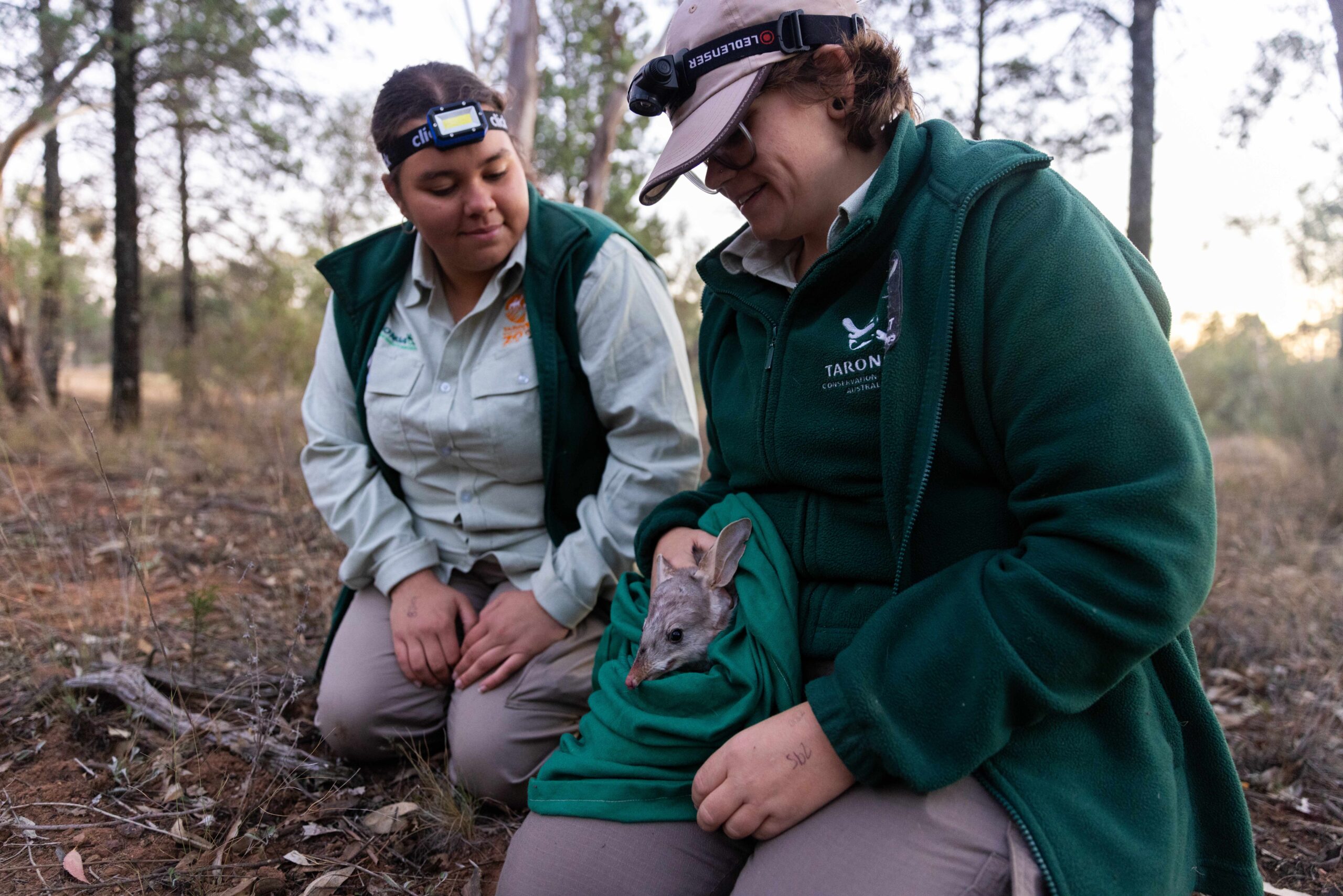
Population monitoring conducted at the Taronga Sanctuary inside Taronga Western Plains Zoo has confirmed an estimated population of 212 greater bilbies (Macrotis lagotis), marking a major milestone for the nationally threatened marsupial.
The latest survey recorded 109 individual bilbies, including 45 newly identified individuals, confirming sustained, free-ranging population growth within the zoo’s 110-hectare feral-predator-free enclosure.
Since the introduction of 18 founder individuals to the Sanctuary in 2019, conservation officers have confirmed 241 wild births within the protected area.
The breeding success has enabled the translocation of 62 Taronga-bred bilbies to establish or reinforce wild populations, including reintroductions to the Wild Deserts project in Sturt National Park, NSW, and the Australian Wildlife Conservancy’s Newhaven Wildlife Sanctuary in the Northern Territory.
Feral predators – specifically European red foxes (Vulpes vulpes) and feral cats (Felis catus) – remain the primary driver of historic bilby population declines across mainland Australia, where the species’ distribution has contracted from approximately 70 per cent of the continent to less than 10 per cent of its former range.
Behind-the-scenes monitoring protocols within the Taronga Sanctuary combine overnight trapping, clinical health assessments, body condition scoring, and biometric data collection:
- Genetic profiling: Newly captured unchipped individuals receive subcutaneous microchips and tissue sampling for DNA profiling to track genetic diversity and manage pedigree lines across the breeding population.
- Translocation readiness: Health assessments ensure individuals selected for external wild translocations meet physiological, weight, and health criteria required for release into broader Australian arid ecosystem recovery programs.
Taronga Western Plains Zoo Conservation Keeper Leonie Pascua highlighted the dual role of the sanctuary as both a secure insurance population and a generator for broader rewilding efforts.
“To see the bilby breeding population and program continue to grow inside the Taronga Sanctuary is incredibly rewarding for our team. Every new bilby recorded represents another step forward in securing the future of this species,” Pascua said. “The bilbies living in the sanctuary are not only contributing to a healthy and sustainable breeding population, but they also play an important role in supporting recovery efforts for the species more broadly.”
Beyond species preservation, the reintroduction of greater bilbies serves a critical ecological function in restoring Australia’s arid landscapes.
As “ecosystem engineers,” a single bilby can turn over up to 20 tonnes of soil per year through foraging and burrowing activity. This soil disturbance traps seeds, organic matter, and moisture, enhancing soil fertility, fungal spore distribution, and native seedling germination in arid zones.
Taronga Conservation Society Australia continues to support multi-agency recovery efforts combining captive breeding, predator-proof fencing, research, and community partnerships to mitigate extinction risks for threatened native fauna.
