
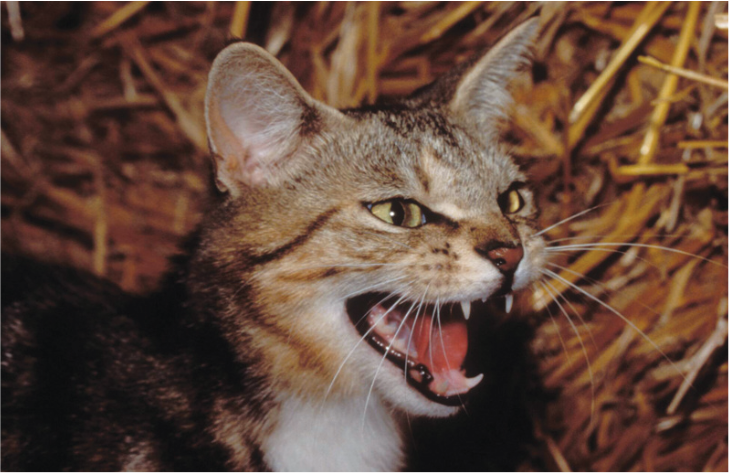
As the impact of feral cats on Australia’s native wildlife continues to be under the spotlight, the Australian Wildlife Conservancy (AWC) has announced it is launching a new National Feral Cat Research Program.
Founded in 1991, AWA was established in response to Australia’s mammal extinction crisis. Its latest program, announced in August, will begin with a pioneering genomic study of 400 feral cats to identify new ways of controlling the predators, including the potential for future genetic biocontrol methods.
Introduced to Australia on the First Fleet in 1788, cats have spread across 99 per cent of the continent and many islands after being deliberately introduced into agricultural regions to eradicate rats. By the mid-1860s, were already considered a pest themselves and the feral cat population has continued to prove difficult to control.
The Invasive Species Council estimates that both domestic and feral cats kill nearly 1.1 billion mammals in Australia each year and have significantly contributed to the extinction of 22 endemic Australian mammals since their arrival.
AWC’s genomic study, being run with the CSIRO and the WA feral cat management community, aims to help scientists address knowledge gaps surrounding the predator. By using whole genome re-sequencing of feral cat populations in priority areas, beginning in Western Australia, AWC hopes the findings will help assess the feasibility of potential new genetic biocontrol technologies, including gene drives, as potential tools for reducing cat populations nationwide.
“We’re hoping to crack the nut of how to control cats and reduce their impact on over 200 threatened species that are negatively impacted by their presence,” Dr Jennifer Pierson, AWC’s National Science Team Manager and the leader of the feral cat genomics study said. “Currently, we have different methods that we use to reduce cat populations, such as shooting, trapping, baiting and Felixer grooming traps, however they’re all expensive, labour intensive, and have variable success.”
The genomic study is the first of seven actions AWC aims to take over the next four years with the new National Feral Cat Research Program.
“While previous studies have conducted whole-genome resequencing for feral cats, it has only been done for a small handful of individuals,” Pierson said.
“A strong baseline of whole genome data at a large scale is critical in order to develop and evaluate long term-solutions to effectively manage feral cats across the country.”
Step two will include collaring cats to see how they move through the landscape and will use existing data to test whether fire and herbivore management methods have translated into fewer cats, which native species benefit from this management, and which species need more support and to what scale.
As part of the third step, AWC will meet with Indigenous rangers in Central Australia to capture the knowledge that First Nations People hold about the ecology of cats. Following the workshop, AWC will incorporate this knowledge into their efforts to reduce feral cat activity around Newhaven Wildlife Sanctuary and Ngalurrtju Aboriginal Trust.
The fourth step will see an increase in feral cat control measures, with AWC will expand its ‘Eradicat’ program which involves deploying felixers to control feral cat populations and commencing weekly feral cat shootings at Piccaninny Plains Wildlife Sanctuary through to November. The shooting campaign will run over the next two years, in areas where AWC is already conducting fire management and herbivore control activities.
As a fifth step, AWC will develop a standardised approach to the way motion sensor cameras are deployed on sanctuaries in a bid to reduce variation and improve the quality/reliability of the data that is collected.
Following the successful release of Woylies (Brush-tailed Bettongs) beyond the fence at Mt Gibson Wildlife Sanctuary in Western Australia, AWC will expand its ‘beyond the fence’ reintroduction program into the desert.
Feral cat susceptible native mammals will be released outside fenced areas at Newhaven Wildlife Sanctuary and Ngalurrtju in Central Australia, following the implementation of a targeted feral cat baiting program to reduce feral cat populations and maximise the chances of reintroduction success.
Finally, AWC will launch a comprehensive national communications campaign focused on the impact of feral cats in Australia, aimed at increasing public awareness and understanding of the significant threat they pose to the country’s native wildlife.
The communications plan will incorporate all areas of communications, including media relations, digital and social media, stakeholder engagement, content development, partnerships, and public advocacy, to ensure broad reach and meaningful impact across diverse audiences.
This project is supported by funding from the WA Government’s Feral Cat Management Grants, with nearly $140,000 has been awarded to fund the research.
JULIA GARDINER