
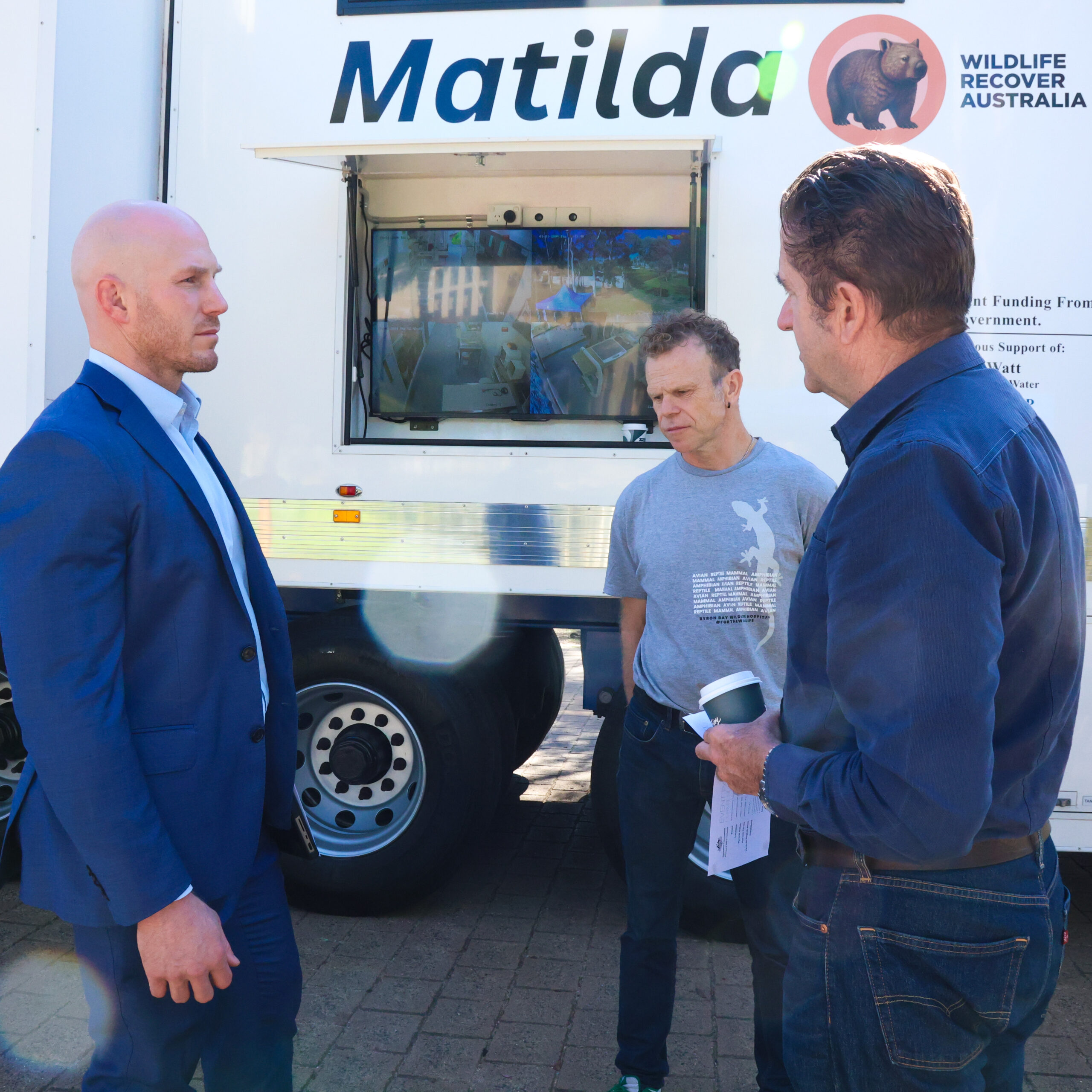
Australia’s first purpose-built mobile wildlife hospital Matilda, has completed an extensive tour across the nation assisting ill and injured wildlife, engaging with communities and raising awareness of the importance of collaboration to improve outcomes for Australia’s wildlife.
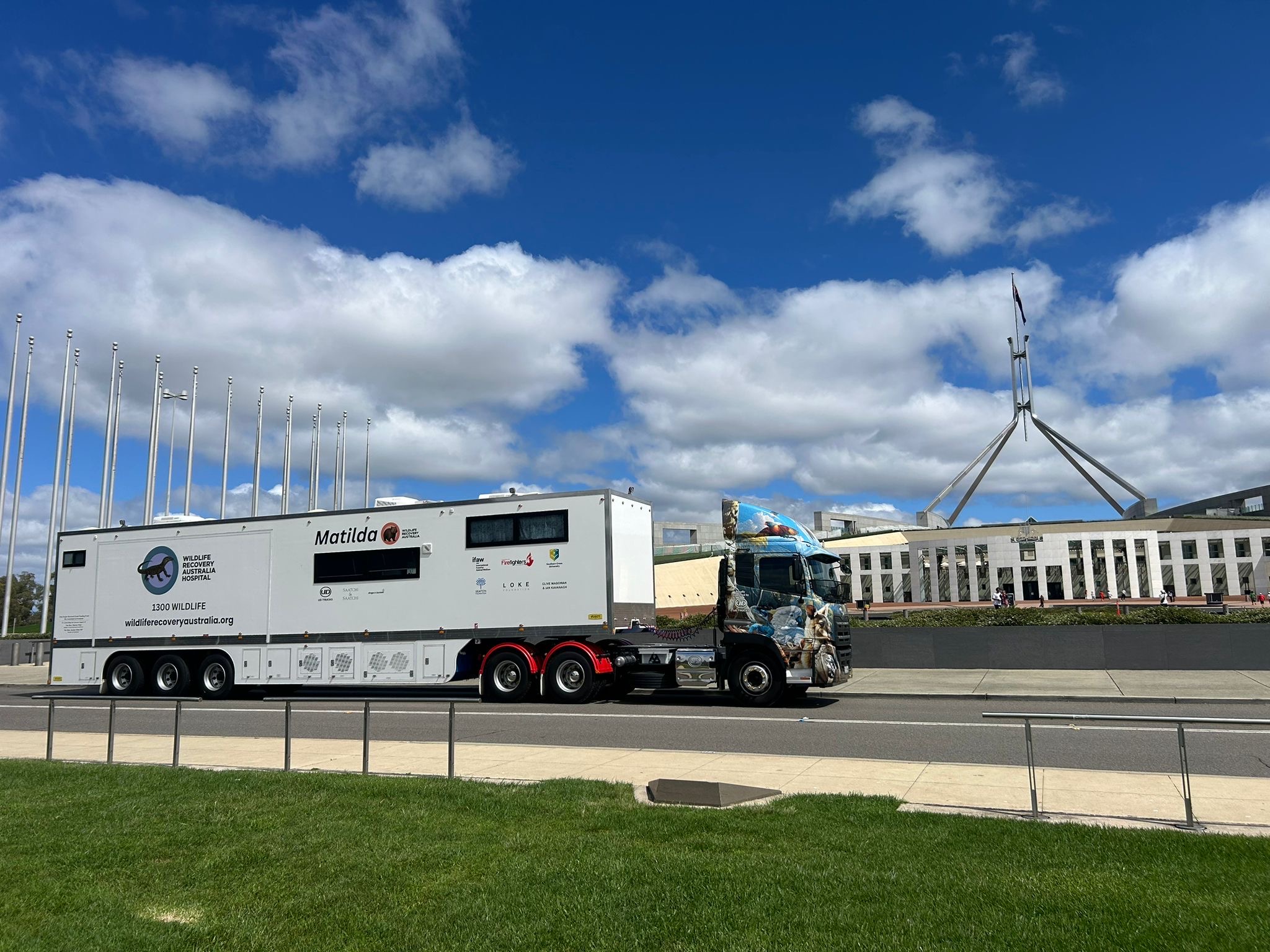
A unique national conservation asset developed by Wildlife Recovery Australia, Matilda is a custom-designed trailer towed by a UD Quon prime mover that transforms from a road-going vehicle into a fully operational wildlife hospital able to quickly deliver expert veterinary care almost anywhere in Australia.
The inaugural national tour of the mobile facility began on World Wildlife Day on March 3 departing from Byron Bay in New South Wales. Covering more than 17,000km across a three-month journey, Matilda visited sites in New South Wales, Australian Capital Territory, Victoria, Tasmania, South Australia and Western Australia.
“Throughout the trip Matilda partnered with local wildlife rescue organisations, veterinarians and wildlife carers to provide treatment, knowledge-sharing and community engagement,” Stephen Van Mil, Chief Executive Officer of Wildlife Recovery Australia said.
“Far more than a roadshow, the tour combined clinical care, education, collaboration, advocacy and showcased a new model for wildlife healthcare while strengthening Australia’s national wildlife emergency response capability.”
Alongside Stephen, the team on Matilda included Wildlife Recovery Australia’s Chief Veterinary Officer Bree Talbot, and a rotating mix of associate veterinarians, veterinary nurses and engagement support staff, driven by truck drivers Rob Jarvis, David King and Peter Robinson, who each drove different stints of the journey.
“We were thrilled to achieve an ambitious outreach program with Matilda, as we interacted with local communities, wildlife carers, veterinary professionals, universities and decision-makers across Australia,” Talbot said.
“Along the way, we were able to treat a variety of wildlife, support and share knowledge with local rescue organisations, meet with politicians and industry stakeholders, whilst showcasing the innovative use of veterinary technology.”
Matilda carries much of the equipment normally found within a permanent on-site wildlife hospital, including consultation, diagnostic, treatment, radiology, ultrasound, endoscopy, patient monitoring and surgical facilities.
Together with a comprehensive onboard pharmacy, oxygen therapy system, refrigeration, rehabilitation supplies and wildlife transport equipment, Matilda has onboard power generation systems and Starlink satellite communications. This enabled Matilda’s veterinary team to stabilise, diagnose and treat a wide range of Australian native wildlife in the field.
“During the tour, we assessed and treated a broad range of native wildlife, including sea turtles, penguins, wombats, koalas, macropods, possums, cockatoos, pelicans, sugar gliders, flying foxes, possums, reptiles, orphaned marsupials, and a wide range of bird species – including birds of prey,” Talbot said.
“In addition to treating birds with various traumatic injuries, we performed koala health assessments, multiple disease investigations, eye surgery on an eastern quoll, and specialist treatment of a king penguin.”
When Matilda was in Western Australia, the team also unexpectedly became part of an operational disaster response unit following the impact of Ex-Tropical Cyclone Narelle on the states far north-west coast near Exmouth and the Ningaloo Reef.
Although access delays meant relatively few surviving cyclone-affected animals remained by the time teams reached some impacted areas, Van Mil said the deployment demonstrated exactly why Australia needs rapidly deployable wildlife veterinary capability during natural disasters.
“The experience reinforced Matilda’s value as a national emergency response asset capable of mobilising wherever wildlife disasters occur,” he said.
“Our veterinary personnel were deployed ahead of the truck while road access was being restored, with Matilda following once conditions allowed safe access. The team worked alongside local responders and colleagues from WA Wildlife, and focused on wildlife triage, veterinary treatment, emergency logistics and coordination with wildlife carers.”
With Matilda’s journey passing through multiple Australian jurisdictions, Talbot said careful planning was required to comply with cross-border biosecurity requirements.
“We carried dangerous goods documentation and chemical manifests, and undertook regular medication inventories whilst maintaining vehicle inspection readiness,” she said.
“We have standard operating protocols for the cleaning and disinfection of clinical areas, and live wildlife was removed prior to border crossings where required.”
Community engagement was a key focus of Matilda’s national trip, and the onboard team engaged with thousands of Australians through education and community events, raising awareness of Australia’s wildlife healthcare challenges.
“A highlight of the tour was a stop outside Parliament House in Canberra to showcase wildlife care to politicians, plus also the various school visits and public open days that we held in towns big and small across the country,” Talbot said.
“And in addition to strengthening partnerships with universities, governments and corporate supporters, we’re also proud to have been able to build and strengthen relationships with wildlife hospitals, carers and veterinarians nationwide.”
In New South Wales, Matilda’s tour took in Coffs Coast Wildlife Sanctuary, the National Marine Science Centre, Secret Creek Sanctuary and Wollemi Wildlife Hospital, Southern Highlands Wildlife Sanctuary, Parliament House in Sydney, Port Stephens Koala Hospital and Koala Conservation Australia in Port Macquarie.
Matilda travelled by ferry to Tasmania to visit Bonorong Wildlife Sanctuary, Tasmania Wildlife Hospital, and Raptor Refuge. In South Australia, the tour included stops at Barossa Wildlife Rescue, Southern Koala and Echidna Rescue, Western River Refuge, and another ferry ride across to Kangaroo Island.
Van Mil said planning is already underway for a second national tour with Matilda.
“Wildlife Recovery Australia has a long-term vision to improve wildlife rescue, treatment and rehabilitation across Australia. We’re working hard to expand our national outreach and disaster response capability, enhance volunteer engagement, and forge stronger partnerships with universities, wildlife organisations and veterinary professionals,” he said..
“Our inaugural tour demonstrated not only what is possible with a mobile wildlife hospital and the importance of developing a nationally coordinated approach to wildlife rescue, treatment and rehabilitation, but importantly – how collaboration between communities, wildlife carers, veterinarians, governments and industry can improve outcomes for Australia’s wildlife.”
PHIL TUCAK
To learn more about Wildlife Recovery Australia and support their important work, you can visit: www.wildliferecoveryaustralia.org and follow their activities on Facebook, Instagram, LinkedIn and YouTube.
