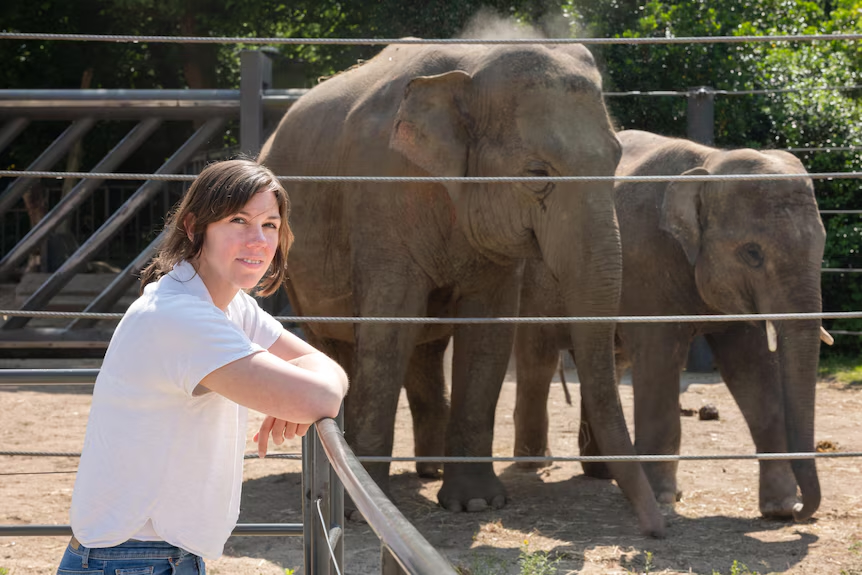
A Victorian zoo is taking part in a clinical trial of a new vaccine to protect elephants against the deadly elephant endotheliotropic herpesvirus (EEHV).
If caught, some types of the virus can cause a highly fatal hemorrhagic disease when transmitted to young Asian elephants, and while EEHV can be treated with a rapid application of antiviral drugs, the treatment has only been effective in around one third of cases, with the virus killing 80 per cent of severely affected individuals.
EEHV mostly affects young calves born in captivity. The first case of a fatal form of EEHV was documented in 1990, with over fifty documented disease cases in North America and Europe since 1995, of which only nine have been successfully cured.
Given EEHV haemorrhagic disease can progress rapidly, with massive internal bleeding leading to death within just 24 hours, researchers around the world have been working to find another solution.
In 2023, Werribee Open Range Zoo lost nine-year-old Asian elephant, Man Jai, to the disease, an event which was devastating for the zoo’s keepers.
Three years on, the zoo has begun trialling a new vaccine against EEHV, stemming from the work of three groups around the world that are developing and trialling vaccines, including one at Chester Zoo, in the UK, which last year tested a vaccine which was found to be safe and, crucially, to activate part of the immune system that helps fight viruses.
Tabitha Hoornweg, a veterinary scientist at Utrecht University in the Netherlands, is part of a group who have been researching how EEHV works and how to stop it since 2019.
“All elephants have this virus or get this virus somewhere during their lives,” Hoornweg said.
“However, for some younger elephants, when they first get in contact with this virus, they get very, very ill.”
Hoornweg’s group have tested a vaccine on older elephants and discovered it is safe, now they hope by using it on younger elephants, to discover whether it helps protect them against EEHV, having given 11 elephant calves in Europe the vaccine, with three young elephants from Werribee Zoo becoming the first from Australia to join a vaccine trial.
Since Man Jai died, elephants at the zoo have undergone weekly PCR and blood tests for EEHV so zookeepers can immediately detect if one of the animals is ill, and now they are hoping that another means of protection is close to reality.
“What Man Jai did for us is really solidify our commitment to fighting this disease … this vaccine trial is one of those ways [we can do that],” Werribee Zoo keeper, Lucy Truelson, said.
“It’s his legacy.”
JULIA GARDINER
Photo: Bas Niemans