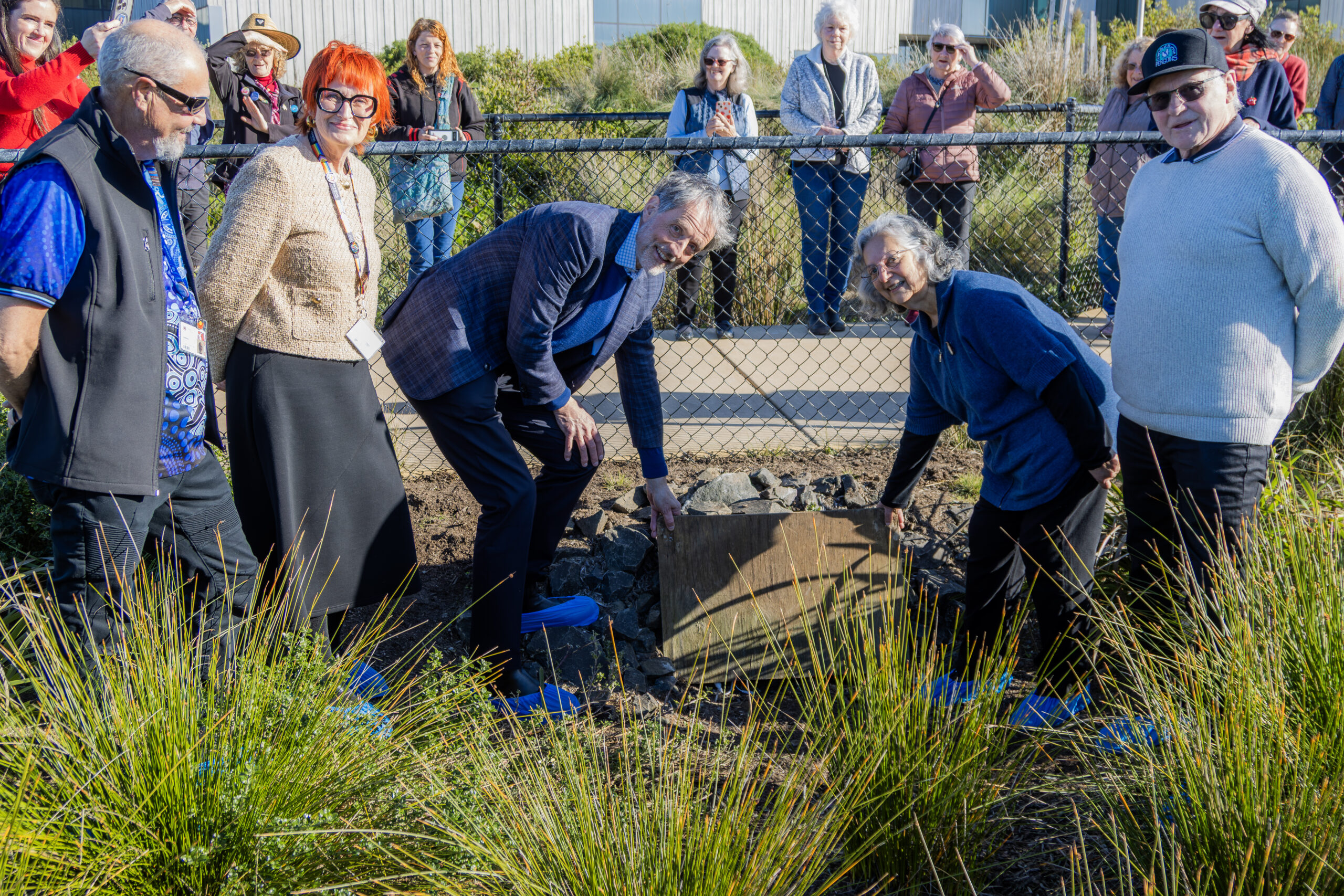
A collaborative project between the University of Tasmania’s Cradle Coast campus and the Friends of Burnie Penguins, has provided an expanded landscape for a little penguin colony along the state’s north-west coast. An area previously used for car parking now has access to purpose-built tunnels positioned below the coastal pathway that leads to the beach, after it was significantly regenerated with hundreds of native plants.
Rufus Black, UTAS Vice-Chancellor, said years of planning and collaboration had been involved in little penguins being welcomed into the expanded habitat.
“The little penguins have lived on this coast for at least as long as we’ve had stories about this special place. The least we could do is make their home a little larger so their colony can grow. More habitat will mean more curiosity and more people falling in love with penguins. That’s what will help secure their future. I hope all our students will tell the story that they studied on the only campus in the world that’s also home to penguins,” he said.
Perviz Marker, penguin ecologist and adjunct researcher at UTAS Institute of Marine and Antarctic Science, and coordinator of the FBP group, explained plans to expand the habitat had begun several years earlier, and had been a collaborative project from the beginning, one that had incorporated several workshopped ideas and elements.
“We’re very excited as it will improve the guided viewing experience for visitors to the Parsonage Penguin colony, and enhance further other work with the Business Northwest group, as well as provide supplementary penguin habitat that’s been lost in this area due to increased coastal erosion. Penguins are very resilient birds who adapt easily to their surroundings. They are unique in the bird world, being one of 18 species that breed and moult on land but who spend most of their lives in the oceans,” she said.
Little penguins are the world’s smallest penguins and have been known inhabitants of the West Park campus area for more than 120 years, nesting throughout the site until 2001 when fencing limited their habitat to the coastal fringe. The birds head ashore to the same burrow where they rest and feed their young after a day gathering food at sea during the breeding season.
In consideration of the growing colony, penguin-friendly amber lighting has also been installed by UTAS throughout the West Park precinct.
Anne Layton-Bennett