
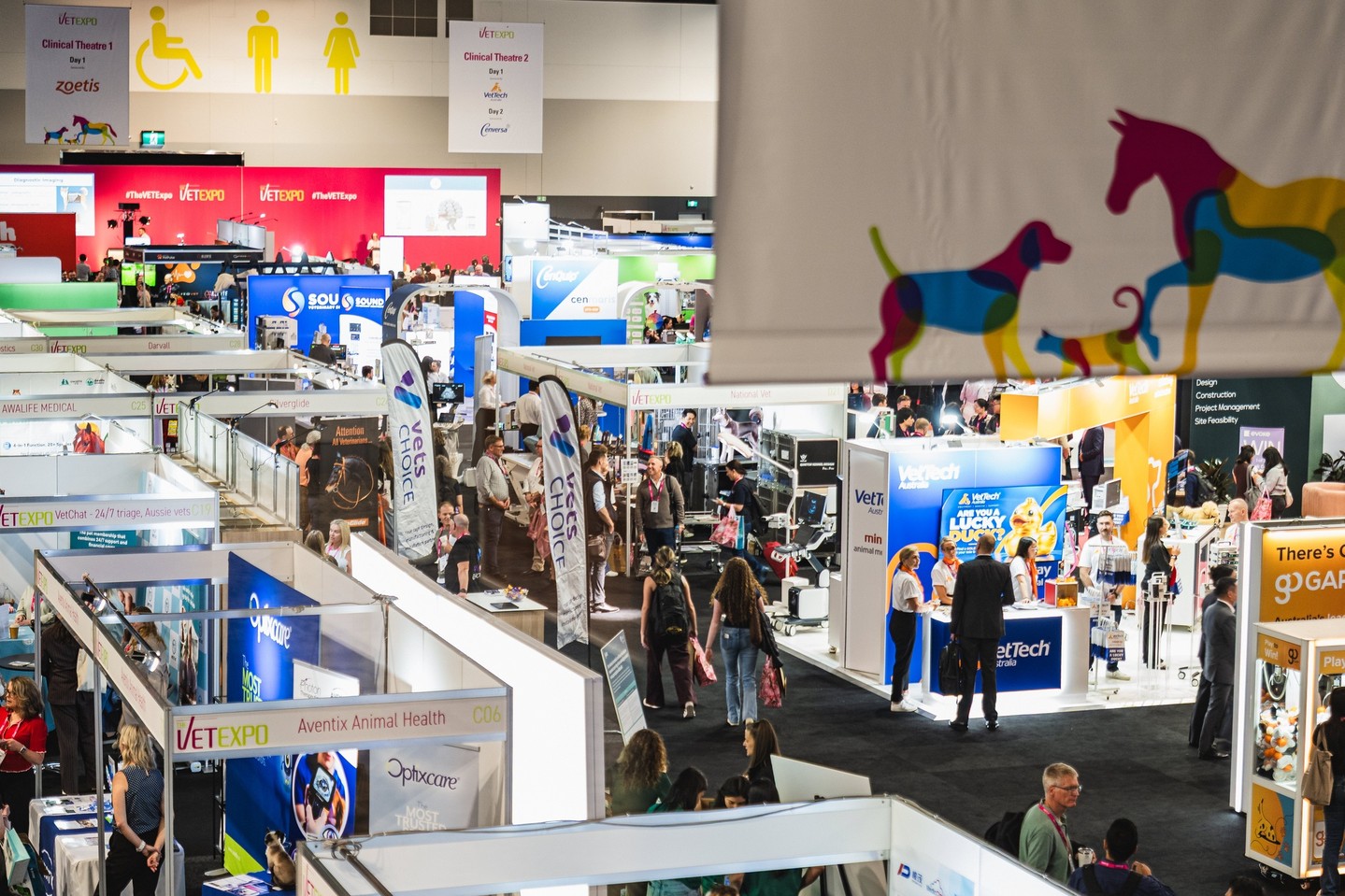
Sydney’s Darling Harbour played host this September to The VET Expo and if the energy on the floor was anything to go by, Australia’s veterinary community left with more than a stack of conference lanyards and a bag of exhibitor samples. Held on September 9-10 at ICC Sydney, the event drew thousands of veterinarians, veterinary nurses, practice managers and industry suppliers for two days that felt less like a trade show and more like a working reunion of an entire profession.
For an industry that spends most of the year scattered across clinics, universities and research labs, The VET Expo has become the one moment where everyone shows up in the same room. This year’s edition leaned hard into that idea, building a program around CPD accredited tracks and more than 140 speakers, while giving equal weight to the parts of the event that don’t fit neatly into a session grid, the conversations that happen between talks, the products discovered by accident on the expo floor and the evening events where the day’s ideas get talked through over a drink.
A conference floor built for curiosity
Walk onto the show floor at ICC Sydney on either morning and the scale of it was hard to miss. More than 160 exhibitors filled the space, ranging from established pharmaceutical and diagnostics companies to a dedicated zone of 30 start-ups, each pitching a genuinely new idea to an audience that could make or break it within a single conversation. That start-up zone, in particular, has become one of the quiet highlights of the event. It is where a vet nurse with a side project in wound care software ends up demonstrating alongside multinational device manufacturers and where the newest thinking in the sector often surfaces first.
Innovation Alley captured this spirit best. Rather than a single stage or booth, it worked as a rolling showcase of the technology reshaping day to day practice, from diagnostic imaging tools to telemedicine platforms and practice management software built specifically for the pressures Australian clinics are facing right now. Attendees moved through it in waves between sessions and the conversations it sparked spilled well beyond the alley itself.
Keynote moments on the plenary stage
Each morning began the same way, with the whole event pulled into one theatre before splitting off into its specialist tracks. Veterinary wellness educator Sonja Olson spoke on access to care and moral resiliency in veterinary teams, unpacking how barriers to treatment, from cost to geography to cultural competence, create moral distress for the clinicians trying to work around them and what teams can do to build resilience in response.
From there the plenary moved into dermatology, with specialist Dani Hoolahan presenting a case led framework for choosing between Apoquel and Cytopoint before joining Zoetis’s Tinh-Son Nguyen and Beatriz Monteiro for a panel on smarter diagnosis for itchy pets. It was a fitting shape for a keynote morning, a session on the emotional weight of the job, followed immediately by the kind of sharp clinical decision making that fills the rest of a vet’s day.
Day two’s plenary turned the lens onto the profession itself. Leadership consultant Jessica Moore-Jones chaired proceedings as Asha Yeoman, board director and president of the VNCA, addressed the push toward mandatory registration and the legislative reforms reshaping veterinary nursing. A regulatory update followed, with the Veterinary Practitioners Board’s Magdoline Awad and John Baguley joined by DPIRD’s Elysia Harradine to walk through changes to the NSW veterinary practice framework.
The morning closed with its most talked about session, a fireside chat on whether veterinary practice is sustainable, moderated by veterinarian and media presenter Katrina Warren. RSPCA Victoria’s Liz Walker and Melissa Meehan joined RSPCA Pet Insurance CEO Brad Smith to work through the pressures pushing vets out of the profession, from burnout and remuneration to the financial strain reshaping conversations with clients and what role insurance and community clinic models might play in easing it. It was the kind of session that turned hallway conversations into genuine debate for the rest of the day.
Learning that went beyond the slide deck
Beyond the plenary stage, the conference program was built around the reality that vets today need more than clinical updates. Alongside sessions on surgical technique and diagnostic advances, tracks dedicated to practice profitability and mental wellbeing drew some of the most engaged rooms of the two days. It is a sign of where the profession’s head is at. Clinical excellence remains the foundation, but the conversations Australia’s vets want to be having now are just as much about how to keep a practice financially healthy and how to protect the people running it.
The moments that made it a community event
Ask anyone who has been to a few editions of The VET Expo what they remember most, it is the quality networking. Speed networking sessions where new graduates found themselves in conversation with practice owners they would never otherwise meet. It is the queue for a coffee that turned into a debate about anaesthesia protocols. This year’s speed dating style networking sessions leaned into exactly that, giving attendees a structured but relaxed way to build the kind of professional relationships that usually take years to form by chance. Networking like this has become as much a part of The VET Expo’s identity as the CPD program itself. It’s where the trust gets built that makes the rest of the year’s collaboration possible.
A profession taking stock
What stood out most across the two days was not any single announcement or product launch, but the general mood of an industry that is thinking seriously about its own future. Conversations on the floor kept circling back to the same themes, how technology is changing the day to day of clinical work, how practices can stay financially sustainable in a tightening economic environment and how the profession looks after the people in it. The VET Expo did not resolve any of those questions in two days, and it was never going to. But it gave the people wrestling with them somewhere to compare notes.
That is arguably the event’s real value. Australia does not have many moments where veterinarians, nurses, practice managers, specialists and suppliers are all in the same building at the same time, working through the same set of problems from different angles. The VET Expo has built itself into that role and 2026 felt like a version of the event that has settled comfortably into its own identity rather than still finding it.
Looking ahead
Before the doors closed on day two, organisers Terrapinn Australia confirmed the next chapter. The VET Expo will move to Melbourne in 2027, taking place at the Melbourne Convention and Exhibition Centre on September 15 and 16. The event alternates between Sydney and Melbourne each year, giving both of Australia’s largest veterinary communities a turn at hosting and after two days that reaffirmed just how much appetite there is for this kind of gathering, next year’s edition already has a lot to live up to.
For now, the takeaway from Darling Harbour is a simple one. The veterinary profession in Australia is dealing with real pressure, on clinical workloads, on business viability, on the wellbeing of the people delivering care. But for two days in September, in one building by the harbour, it also looked like a profession that still knows how to show up for each other, swap ideas freely, and leave more energised than when it arrived.
The VET Expo 2027 will be held September 15-16 at the Melbourne Convention and Exhibition Centre.
This article was provided by The VET Expo.
