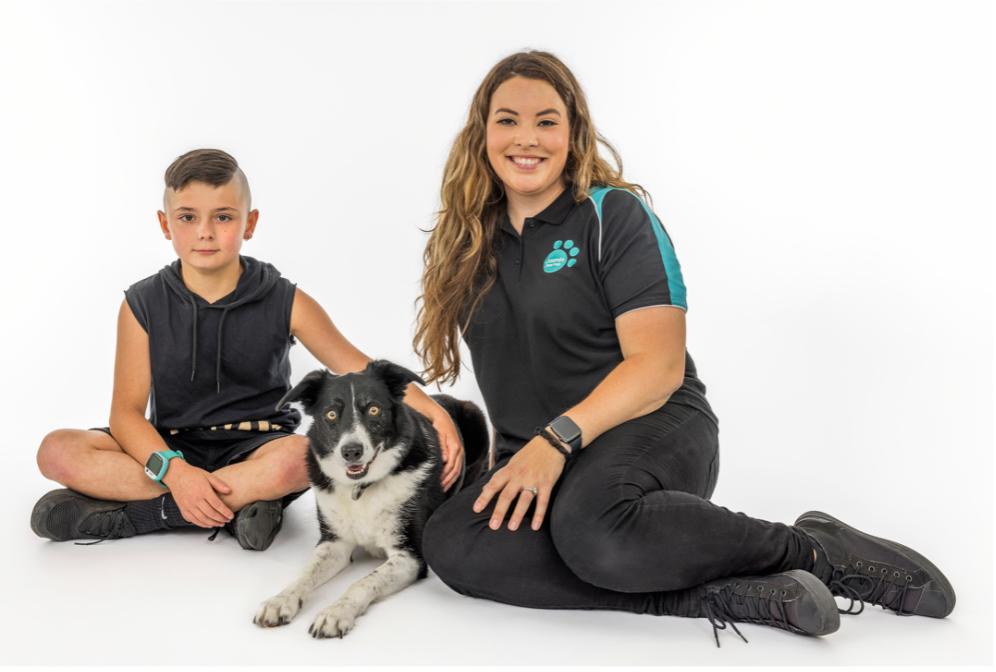
Therapy or wellbeing dogs, trained in partnership with their handlers, are utilised in schools to provide wellbeing support to students. Scientific and anecdotal evidence supports the role dogs play in student learning, which is why the Paw Pals program from MacKillop Family Services seeks public and professional support to keep the service going and growing.
Paw Pals is a canine-assisted therapeutic program helping vulnerable children rediscover confidence, connection and a readiness to learn. Many children referred to the program find classrooms overwhelming and choose to stay away from school – until a calming presence on four legs motivates them to try again.
“The presence of a therapy dog helps lower anxiety and build trust, creating the emotional safety children need before learning can begin,” says Brona Walsh, MacKillop’s Education and Engagement Programs Director.
Oliver’s story
By the age of eight, Oliver was living with the combined effects of a violent home environment, ADHD and autism. Stress shaped every part of his day, including his ability to function in school. Classrooms felt threatening, and minor changes triggered major emotional responses. His teachers recorded multiple incidents daily and considered his behaviour challenging.
When Paw Pals entered Oliver’s life, his world shifted. Therapy dog Marlowe provided something no adult intervention had yet achieved: a sense of calm. Oliver connected with Marlowe instinctively, quickly finding comfort in her presence. Education specialist Belinda, who worked closely with Oliver, witnessed immediate and profound change. With Marlowe beside him, Oliver was able to remain in a learning space without becoming overwhelmed. His school attendance increased from two hours a day to full days. There were no behavioural incidents during any Paw Pals session, and Oliver was a child restored to learning.
The Paw Pals model extends far beyond passive companionship. It draws from MacKillop Education’s Reframing Learning and Teaching Environments (ReLATE) model, which is a holistic, trauma-informed and responsive framework. Sessions are deliberately structured to help students recognise and manage emotions, build trust in adults and peers, and engage safely with learning tasks. Activities might include identifying emotional cues in the therapy dog, co-developing safety and regulation plans, storytelling inspired by the dog, or practising cooperation and patience through shared routines.
Importantly, the therapy dog is a bridge and support for learning, and not the focus of a session. Each interaction is designed to strengthen emotional literacy while maintaining the dog’s welfare, autonomy and comfort. MacKillop’s Paw Pals program prioritises the wellbeing of the animals themselves while seeking the best outcomes for students. This covers best practice care for the dogs, including:
- Balance: Rest days vs workdays
- Capped hours of work in a day
- Controlled environment with break times and rest areas
- Safety plan ensuring rules and boundaries
- Daily checklist and site set-up
- Observing behavioural cues for signs of stress
- Exercise and nutrition to maintain cognitive function
and energy levels - Regular heath checks for sprains, strains and fractures
- Annual vet examinations where the vet is informed
about the nature of the dog’s work
Since 2018, more than 1,700 students have journeyed back to learning through the Paw Pals program. Starting with just one therapy dog, Paw Pals today has expanded to 21 therapy dogs and 15 facilitators across Melbourne, Geelong, Bendigo and Ballarat. Educators where the program has been implemented report improved attendance, and greater student willingness to engage in learning tasks.
The broader need for programs like Paw Pals is significant. Student attendance rates are falling, disengagement is rising, and one in five Australian children do not complete Year 12. For children who have experienced neglect or abuse, rebuilding trust is often the first (and hardest) step. Research consistently shows that animals can act as social buffers, facilitating communication and relationship repair when human interactions feel unsafe.
Paw Pals relies on community support to continue and expand its work and meet demand. MacKillop Family Services invites public support through its annual appeal at pawpalsappeal.org.au. Support from the broader community, many of whom understand animals and their potential, can help place more therapy dogs like Marlowe into schools, creating calmer classrooms and more hopeful futures for students who need it most.
*Name changed and stock image used for privacy and protection.