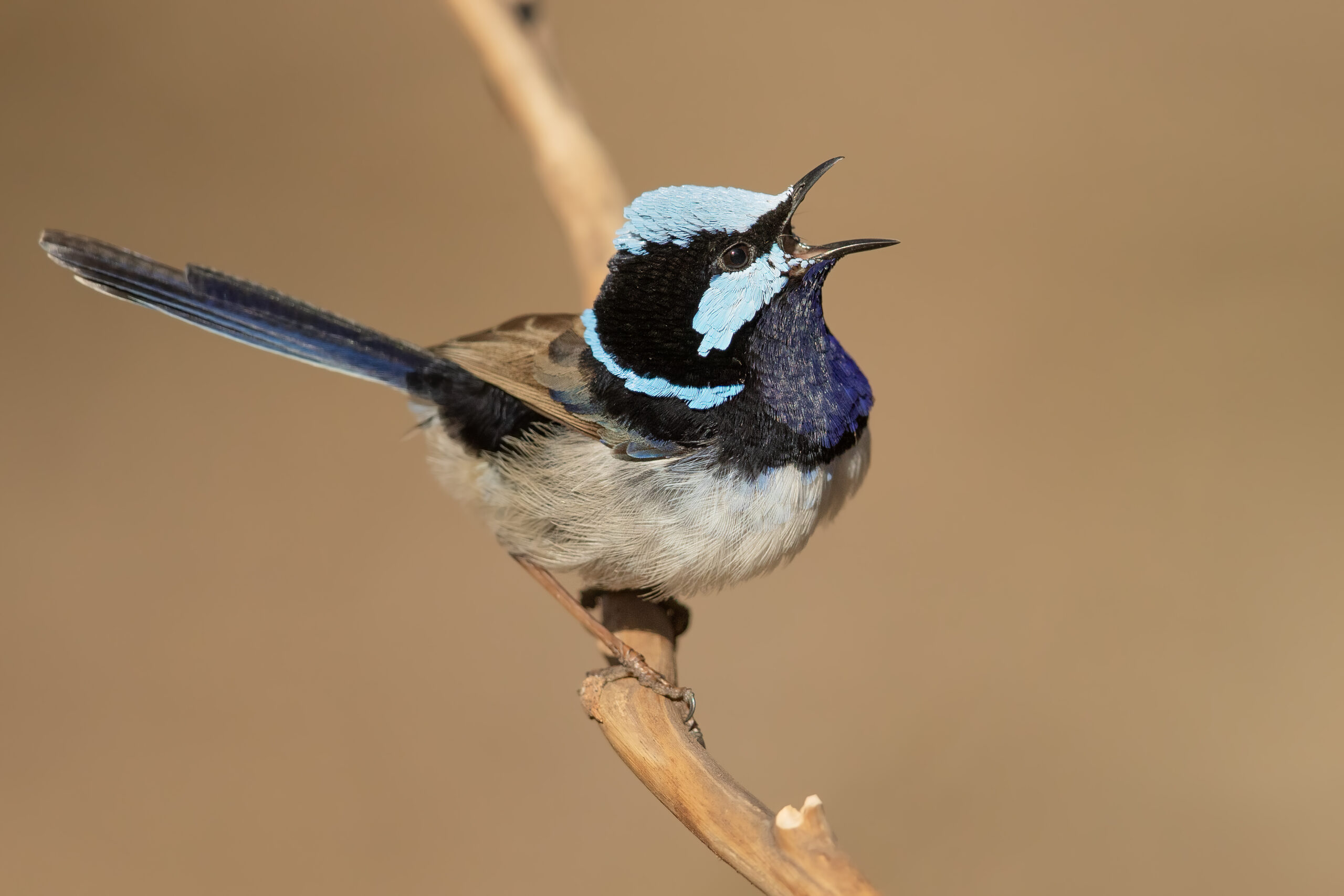
Researchers at Australian National University (ANU) studying Canberra’s superb fairy-wren population have been confronted by the largest loss of the species in a single winter since the monitoring began in the late 1980s.
The deaths of 37 adults (51 per cent) and 33 chicks (85 per cent) meant less than half of the superb fairy-wrens living in the Australian National Botanic Gardens survived the 2025 winter.
“It’s a big loss. To put it in perspective in 1999, 2002 and 2003 we lost about 20 per cent of the adult birds and those were exceptional years,” ANU’s Damien Farine said.
Superb fairy-wrens are native to Australia and are found in Tasmania and throughout eastern Australia to the south-eastern corner of South Australia. They typically live in open eucalypt woodland forests, in pairs or small groups.
The typical breeding season for the species is from September to January, and the wrens are cooperative breeders, meaning all members of the family group help to feed the nestlings and rear young, as well as defend the territory. A family group typically comprises of the breeding pair, and up to seven helpers, which are often males that were raised in the same territory.
While ANU researchers have yet to determine what caused such a significant number of deaths, the nature of this year’s winter might have had an impact.
“We had quite a warm start to winter and then it got cold quickly. Previous modelling on this population of superb fairy-wrens found that there was quite high mortality in the weeks after a winter heatwave,” Farine said.
“The birds need lots of still, sunny winter days, as that’s when they replenish their energy and survive the cold nights. But this sometimes leaves them unprepared for a very sudden turn of cold weather.”
Another group of birds monitored by ANU experts in the foothills of Mount Ainslie, showed a 70 per cent mortality rate.
A recent study conducted by a University of Sydney researcher, who partnered with BirdLife Australia, looked into reasons for the significant decline in numbers on Sydney over the last few decades, finding that pressure from other bird species on limited habitat was pushing the wrens out, and that introduced predators such as foxes and cats were also a factor in their disappearance.
Farine believes the ANU figures are significant, and that the species may be on a precipice.
“We’ve seen widespread reported declines of woodland birds in Australia over the past few decades. This population is no exception. It was already down by about 65 per cent when compared to the long-term size of this population, and now it’s crashing further. It is crazy to think that we might be seeing the population make its way towards extinction,” Farine said.
“”We’re trying to understand — are there some features in the habitat that we could provide that would help them really get through those critical moments? All it takes is a couple of good years and suddenly the population can bounce back. We need some wet weather and stable winters.”
JULIA GARDINER
Photo: JJ HARRISON