
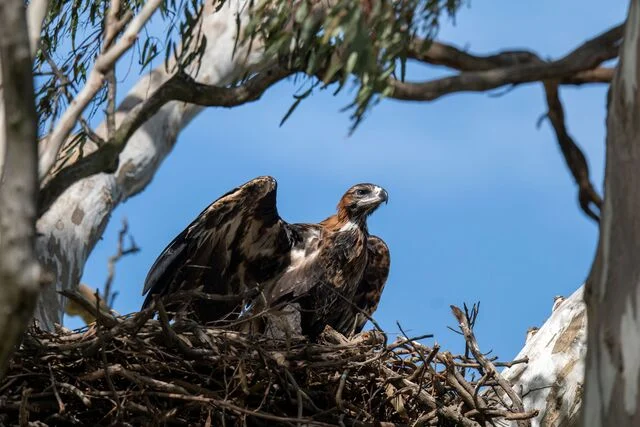
A coordinated effort between wildlife carers, veterinary staff and community members has seen a young Wedge-tailed Eagle successfully returned to its nest after treatment for a fractured wing.
The eaglet was found on a farm at Doreen, north-east of Melbourne, after falling approximately 30 metres from its nest. At the time, the bird was still dependent on its parents and had not yet developed the ability to fly.
The injured bird was transferred to Healesville Sanctuary, where veterinarians diagnosed a wing fracture – a potentially life-threatening condition for a nestling that would normally remain in the nest during early development.
Vet nurse Hayley Bradshaw said the case highlighted the importance of specialised rehabilitation infrastructure for large raptors.
“These animals are big. They need space to move and express natural behaviours,” she said.
Following initial treatment, the eagle underwent a period of confinement to allow the fracture to heal before progressing to flight conditioning. Rehabilitation took place within the Sanctuary’s Raptor Rehabilitation Centre, which features a 100-metre flight tunnel designed to rebuild strength and fitness in birds of prey.
The ultimate goal, Bradshaw said, was always reunification.
“For all wildlife, we want to return them to the wild where they came from. For this animal, its best chance of developing properly was to be with its parents — feeding naturally and learning appropriate behaviours,” she said.
The return-to-nest operation required collaboration between carers, volunteers, an arborist and the property owner to safely place the bird back into its original nest.
The case is one of 12 wedge-tailed eagle admissions to the Sanctuary’s Australian Wildlife Health Centre since September 2025. Clinicians suggest seasonal conditions, including wind events and juvenile inexperience, may be contributing to the increase in presentations. Other recent cases have included pelvic injuries and damage to primary flight feathers.
The Australian Wildlife Health Centre treats approximately 2,000 animals each year and also provides care for the Sanctuary’s resident species. Its facilities are designed to allow public visibility of veterinary work, supporting education and awareness.
The Raptor Rehabilitation Centre, completed in 2023 with funding support from the Victorian Government and private donors, enables progressive conditioning of raptorial birds including eagles, hawks, falcons and owls prior to release.
Wildlife authorities remind the public that injured raptors should be observed from a distance to avoid further stress or injury, with assistance sought through organisations such as Wildlife Victoria.
The successful outcome underscores the role of coordinated veterinary care and specialised rehabilitation in improving survival outcomes for native wildlife.