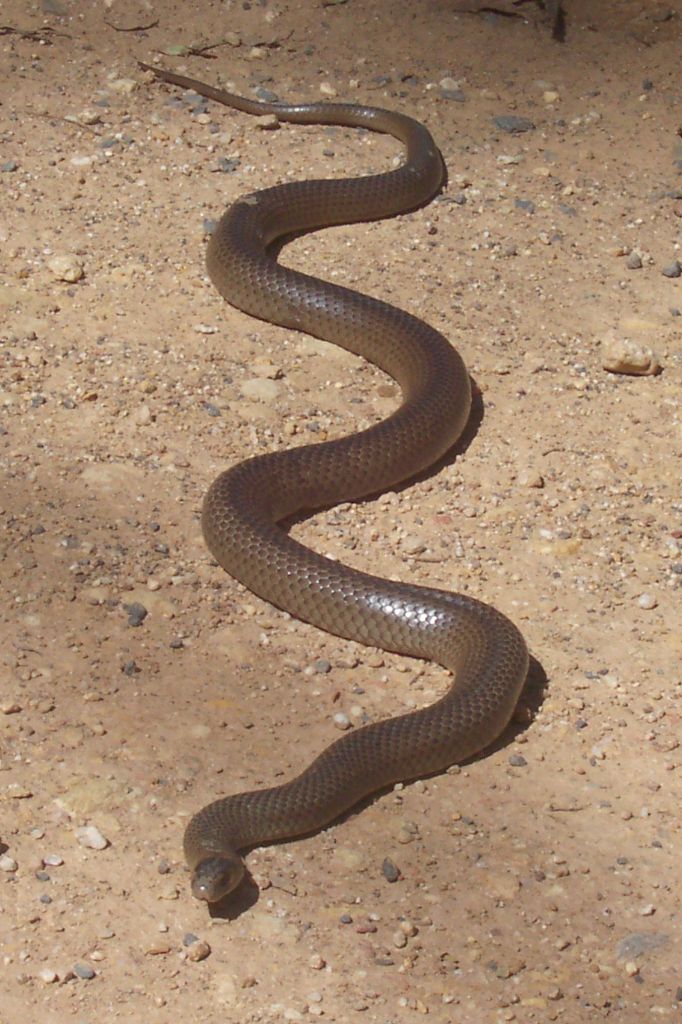
New research has found that the antivenom used to treat eastern brown snake bites is potentially not as effective as it could be, and it all comes down to location.
Native to eastern and central Australia, the eastern brown snake is one of the world’s most venomous terrestrial snakes, second only to the inland taipan. The snake’s venom effects the circulatory system, causing haemorrhaging, cardiovascular collapse and cardiac arrest.
As well as being highly venomous, the eastern brown snakes can be aggressive when they feel threatened and are responsible for a large proportion of snake bite deaths in Australia. Data from the National Coronial Information Service (NCIS) recorded 35 deaths in total between 2000 and 2016, while research published by the National Institutes of Health shows that around 500 snake bite cases require the use of antivenom each year.
While the use of antivenom is typically successful, a newly published University of Queensland study suggests the antivenom given to people bitten by eastern brown snakes may not be as effective as it could be.
Bryan Fry, from UQ’s School of the Environment, led a team which assessed the blood-clotting toxins in venoms from every Australian brown snake species.
“We discovered not all brown-snake venoms are the same – meaning that lifesaving antivenom may need an urgent upgrade,” Fry said.
The team used a process called thromboelastography, a method which assesses the efficiency of blood coagulation by taking a blood sample and simulating blood flow with equipment which produces real time data on the entire clotting process including dissolution.
When testing blood samples with venom from eastern brown snakes, the study found that the venom samples from snakes in southern Australia have venom that builds a strong, stable blood clot, those from northern populations triggered fragile blood clots, which developed incredibly quickly.
“Some venoms formed a rock-solid clot in blood, while others spun up a rapid but flimsy web of clots that shredded almost instantly,” Fry said.
“Both venoms can kill but they do it in completely different ways.”
The current process used to create brown snake antivenom uses a pool of venom which is not specific to region, and Fry suggests this could be impacting both treatment of brown snake bites, as well as data regarding the way blood responds to antivenom.
“If [the antivenom] doesn’t have both northern and southern eastern brown snake venom, coverage could be patchy and the antivenom efficacy could vary widely,” Fry said.
“Clinical reports have all brown snake bite cases together regardless of species or location so any differences for the southern population versus all other brown snakes could be obscured.”
The research team will now test all available human and veterinary antivenoms to see if the differences in venom biochemistry are mirrored by variations in antivenom efficacy, before collating hundreds of hospital records of brown snake bites, and sorting them geographically to study the reported clotting patterns.
While ensuring the effectiveness of antivenom is at the forefront of the researcher’s concerns, they will also begin work sequencing the venom genes to pinpoint the mutations responsible for the differences in northern and southern eastern brown snakes.
“We showed the geographic difference in venom effect overlays with a genetic divide within the eastern brown snake. Our research demonstrates how diet steers venom evolution, because the southern populations consume more reptiles than the northern populations which eat more mammals,” Fry said.
“By appreciating both the evolutionary fine-tuning and the clinical outcomes of these venoms we can better tailor our medical responses.”
JULIA GARDINER
PHOTO: PETER WOODARD