New research indicates a threatened marsupial not previously known to inhabit South Australia’s Yorke Peninsula may still survive there as a relict population, based on a reassessment of historical field survey material from one of the region’s key conservation areas.
A paper published in Australian Zoologist reports evidence that the little pygmy-possum could occur within Dhilba Guuranda–Innes National Park – more than 200km west of its nearest confirmed population on Kangaroo Island.
The conclusion follows a recent review of photographs taken during pitfall trapping surveys conducted between 2004 and 2011. While hundreds of captures were identified as the closely related western pygmy-possum, two animals photographed in December 2006 showed features inconsistent with that species.
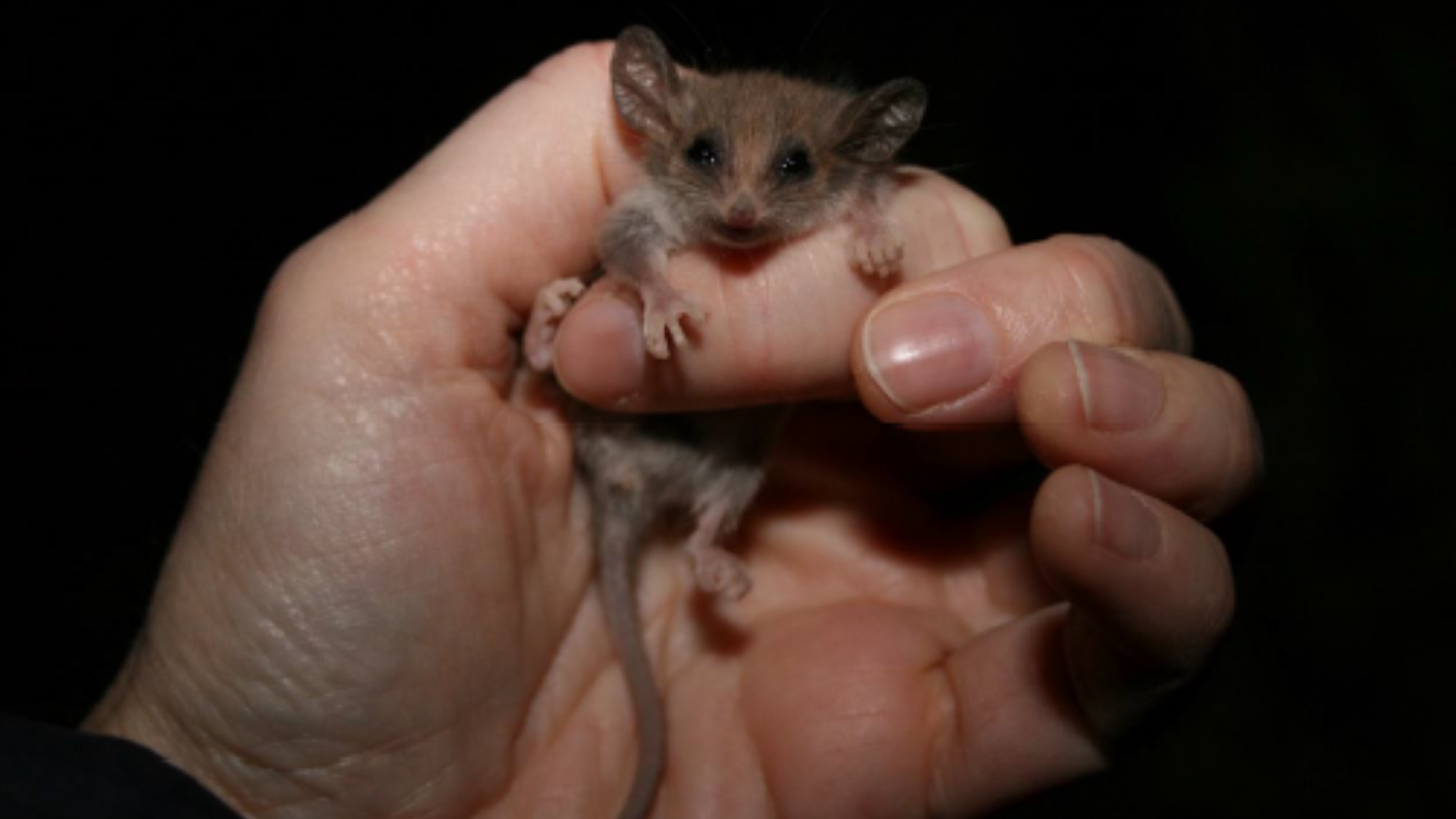
The little pygmy-possum is distinguished by grey ventral fur, compared with the white ventral fur typical of the western pygmy-possum.
Lead author Sophie Petit, from University of Adelaide, said the animals were originally labelled as juveniles because researchers did not anticipate finding the species on the Yorke Peninsula.
“There is no museum or other record of little pygmy-possums for the Yorke Peninsula,” Petit said. “Although the animals looked slightly different, they were assumed to be young western pygmy-possums.”
Weighing only a few grams, the little pygmy-possum is among Australia’s smallest mammals and feeds primarily on nectar, pollen and insects. Confirmed populations currently occur in Tasmania, western Victoria, south-east South Australia and on Kangaroo Island. The species has not previously been recorded on the Yorke Peninsula, and no remains have been identified in local subfossil deposits.
If future surveys confirm the finding, the Yorke Peninsula animals could represent a previously undocumented relict population, potentially isolated for millennia following sea-level rise that separated Kangaroo Island from the mainland.
The possibility is significant given the Yorke Peninsula’s extensive habitat clearing, with roughly 13 per cent of original native vegetation remaining – more than half of it located in the southern peninsula within Dhilba Guuranda–Innes National Park.
“This area is an important refuge for what’s left of the region’s native fauna,” Petit said. “If the little pygmy-possum is still there, it needs urgent attention.”
The researchers also highlight concerns about habitat fragmentation and repeated prescribed burning in the area since the photographs were taken. Little is known about how the species responds to fire, though related evidence suggests it may be less resilient to disturbance than larger pygmy-possum species.
“It’s possible that this population has become extinct in the last 20 years, considering its rarity,” Petit said. “But it would be wonderful to discover it has survived. A precautionary approach to land management until the species’ status is verified would be prudent.”
The study, titled ‘Is the Little Pygmy-Possum Cercartetus lepidus extant on the Yorke Peninsula of South Australia?’ appears in Australian Zoologist.