Humans generally find the food on their plate more interesting when it includes colour variations. A study published recently in the journal Animal Behaviour has found that colour choices may also be important for foraging seabirds, with some colours preferred over others. It provides important information for those species particularly vulnerable to threats from longline fishing, and plastic ingestion.
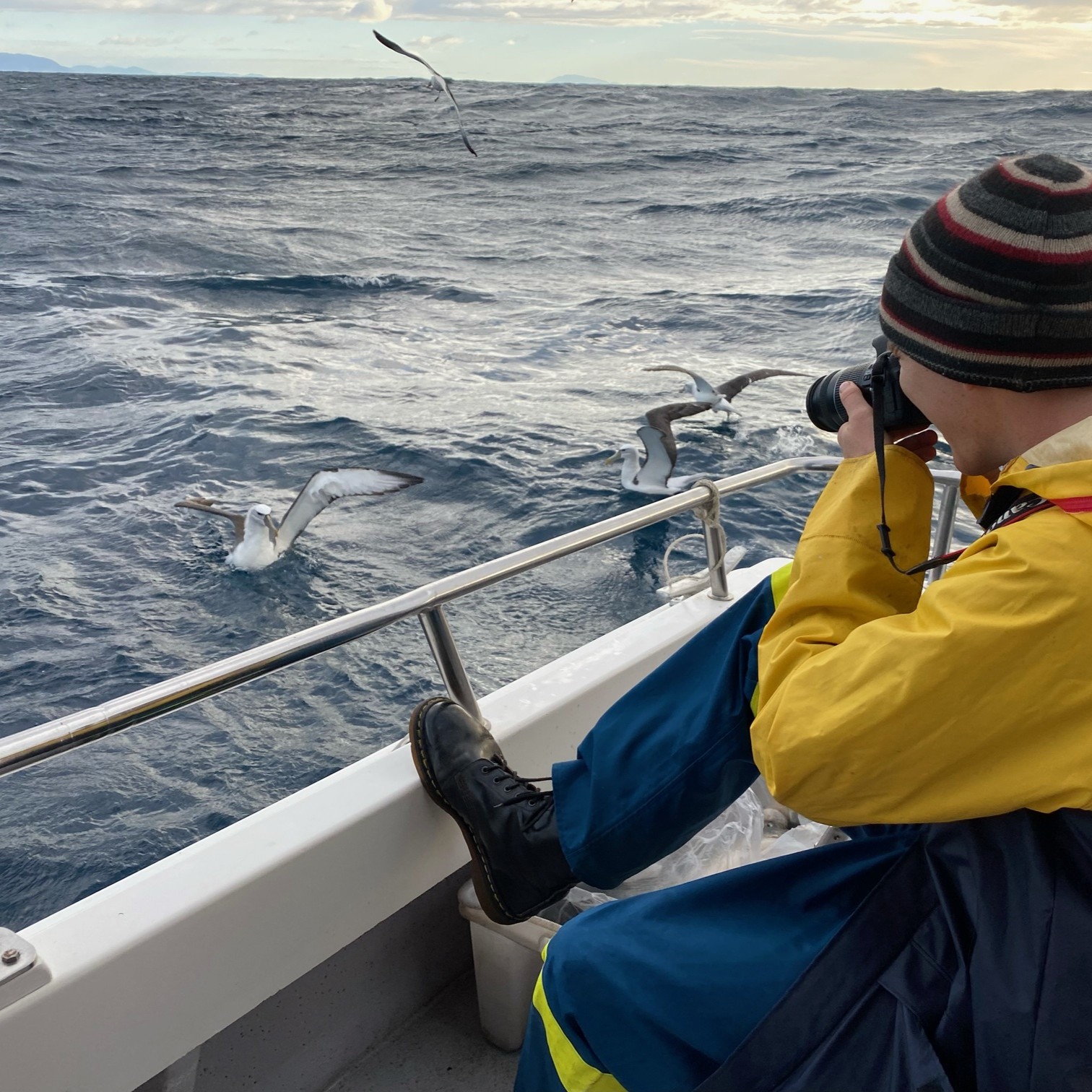
Lead author Elliot Styles, Marine Science Graduate and Field Research Assistant at the University of Tasmania’s Institute of Marine and Antarctic Studies, said 117 trials were conducted for the study in the waters off Tasmania’s southwest coast. Wild pelagic seabirds were offered edible baits coloured either white, yellow, red, green, black or blue, and researchers documented their order of preference.
“This is the first time seabird colour preferences have been tested while seabirds were eating the bait, rather than afterwards such as in bird vomit called ‘boluses’, or opening their stomachs after the bird died. The problem with studying boluses and stomach contents is not knowing what colours of plastic the bird had to choose from, or if only a few specific colour choices were available. Our new approach eliminates this problem, and it has the exciting potential to begin a new theme of seabird colour preference studies,” he said.
Seabirds were found to have a colour preference, and the order in which colours were consumed. White topped the colour preference list, while blue was found to be the least preferred colour for those species that mainly interacted with the study – shy-type albatrosses (Thalassarche cauta) and (Thalassarche steadii), and kelp gulls (Larus dominicanus).
“Both species showed a clear colour preference order, favouring white first, yellow and red second, and green and black third. Blue was the last choice. We also found that multiple species of seabirds being present affected how many baits were eaten by each species. For example, shy-type albatrosses tended to outcompete other species like kelp gulls, eating their most preferred colours and leaving ‘scraps’ for the gulls,” Styles explained.
Despite blue-dyed bait sometimes being used in global longline fisheries to reduce seabird bycatch, the Agreement for the Conservation of Albatrosses and Petrels released a statement in 2023 advising against using this method as there was ‘no experimental evidence of effectiveness in pelagic longline fisheries’, but according to Styles this recent study showed blue-dyed bait might have a place in longline fisheries and it was important further studies were conducted.
“Studies using our method would help build the knowledge of seabird colour preferences, and this could inform decisions around the colour of items most commonly lost at sea, such as fishing ropes and nets, and even equipment like weather balloons which are usually white or grey and which pose one of the highest risks to seabirds because when they burst, the fragments can resemble squid on the ocean surface – the preferred meal for seabirds,” he said.
The study’s results suggested that if weather balloons and other items were coloured in the least preferred colours of black or blue, seabird mortalities could be reduced because birds were less likely to mistake equipment or plastics adrift in the ocean as food.
Anne Layton-Bennett
Photo Credit: Karina Sorrell