
Posted on May 16th, 2013
Training animals in zoos is not just about enrichment – although that is certainly a worthy aim. Increasingly, trainers are working with veterinarians to condition animals for medical examinations and even therapy.
The benefits are obvious – being able to undergo diagnostic tests and treatments without the need for sedation and general anaesthesia minimises the potential for iatrogenic harm and builds a bond between the patient and veterinary team. But staff at Oregon Zoo in the United States discovered another benefit when their efforts to assist an aging otter went viral in a public relations coup.
The patient, a 15 year old male neutered southern sea otter (Enhydra lutris nereis), was admitted for a routine veterinary examination last year. Eddie has lived at the zoo since he was abandoned off the California coast as a pup. According to zoo experts, he would not have survived otherwise. Continue reading Slam dunk for otter health!
Posted on May 13th, 2013
The recent mistreatment of Australian animals overseas has been the source of much consternation in recent months, deflecting attention from conditions on live export ships.
A veterinarian who has spent 13 years working on live export voyages has made a submission to the Department of Agriculture, Fisheries and Forestry (DAFF) review in to Australian Standards for the Export of Livestock (ASEL), which alleges that some in the industry are more concerned with profits than animal welfare.
Lynn Simpson, who has been an accredited on-board veterinarian for 57 live export voyages, as well as having peripheral feedlot, loading and transportation experience, described the suffering of animals resulting from exporters allegedly ignoring the law.
“It should be appreciated that these voyages are not all short and clean as depicted by industry and their public relations machine,” she said. Continue reading Live export vessel veterinarian reports injuries, standards breaches
Posted on May 10th, 2013
“Bounce”, a healthy and well fed Golden Retriever, has an active and varied life. On most days she is able to leave her sleeping quarters and go for a much-anticipated outing for several hours. She shows much enjoyment and excitement on her daily romps, especially when she meets and plays with other dogs (and people too) – some of whom she has got to know and especially like. She loves to follow a scent, roll about in the dirt, run full pelt through the grass, and wade through water. Her escapades often leave her tired and sore, but she is just as happy to do it all again the next day.
“Loafer” the Labrador has a very different life. From a young age he has been kept in a small enclosure. In fact, he has never been exposed to the sort of activities Bounce looks forward to, and consequently does not miss them. Instead, his savvy owners (who are rarely home) have installed a machine that dispenses tasty food to him on a frequent basis. Actually, Loafer the Lab (unsurprisingly) enjoys eating very much; and his diet is so well formulated he is (surprisingly) not obese. He gets vaccinated and wormed and has ready access to veterinary attention, although he has never been ill. Though he is solitary and sedentary, Loafer seems perfectly content.
Perfectly content he may appear, but does he have a good life? Or is it the reverse: does Loafer’s life go badly for him? If you think it does not go badly, do you nonetheless think that his life is significantly worse than Bounce’s or, if you prefer, that Bounce’s life is significantly better than his?
The reason I am asking these questions is because, like many vets, I am interested in “animal welfare”. But more specifically, I want to know what constitutes good and bad animal welfare. Some people have thought that science is the method we should use to answer these basic questions. So, for example, we could run certain tests and make careful and repeated observations of Loafer and Bounce. Continue reading Vet Ethics: The True Meaning of Welfare
Posted on May 8th, 2013
In early April 2012 champion sprinter Hay List, a six-year-old thoroughbred gelding – at the time the highest rated male sprinter in the world and the only horse to ever get close to beating Black Caviar, – underwent surgery for colic at a Sydney equine hospital.
On recovering from he was found to be non weight bearing lame in the near fore leg with swelling about his carpus. Soon after radiographs revealed Hay List had severely fractured his carpus and the owners and trainer were advised he would never race again and that even his survival was at risk. Opinions were obtained from leading equine surgeons around the world with advice ranging from do nothing and hope, to carpal arthrodesis and even euthanasia.
The horse was put into a tube cast and then returned to trainer John McNair’s property at Somersby on the Central Coast of NSW. Here he came under the care of specialist equine surgeon Nicholas Kannegieter and stable vet Brett Jones. On his return he was still Grade 4-5/5 lame, had extensive firm diffuse swelling around the left carpus, pain on even mild flexion and greatly reduced range of motion.
Further radiographs confirmed the severity of the injury revealing a comminuted fracture of the intermediate carpal bone with crushing and fragmentation of the proximal articular surface, multiple avulsion fractures from the caudal aspect of the distal radius and proximal radial, intermediate and ulnar carpal bones, crushing of dorsal articular surface of the radiocarpal and third carpal bones and damage to all major ligaments resulting in joint instability. Continue reading Hay List bucks the odds to return to racing
Posted on May 2nd, 2013
Further to the results of a study published towards the end of last year that estimated the extinction of 279 bird species and subspecies – principally from islands in the Pacific – had occurred during the last 500 years, more recent research that studied fossil records as well as evidence from mathematical modelling, has found that bird loss in the Pacific region is closer to 1000 species. The results of this study were published in the March issue of Proceedings of the National Academy of Sciences, and they confirm extinctions coincided with humans colonising the region approximately 4000 years ago. The research showed the subsequent disturbance of fragile ecosystems from a combination of deforestation, hunting, and the introduction of invasive species such as cats, rats, and pigs – together with the diseases they carried – drove the decline.
Co-authors of the report, Tim Blackburn, director of the Zoological Society of London’s Institute of Zoology, and Richard Duncan, professor in conservation ecology at the University of Canberra’s Institute for Applied Ecology, led the research that widened the earlier study’s scale and extent of the extinctions by incorporating the use of bird fossils to calculate the results. These were collected from 41 remote islands in the eastern Pacific that were among the last to see human habitation. The collected data was used to create a mathematical model that estimated each island’s extinction rates, and showed the islands were once home to a total of 618 populations of 193 nonpasserine landbirds. This comprised 371 populations present at the time of European contact, and 247 populations known only as fossils. Continue reading Humans behind bird species’ loss
Posted on April 30th, 2013
Following a political and humanitarian crisis in Nigeria in 1971, some French doctors came together to form a group called Médecins Sans Frontières (MSF). MSF – also known as Doctors Without Borders – has been involved in many significant crises like those in Rwanda, the Congo, and Bosnia. In its wake, a number of other “Without Borders” organizations have arisen. One of these is the Australian-based Vets Beyond Borders (VBB).
VBB focuses on Asia and the Pacific. In India, where I was fortunate recently to work as a volunteer (alongside an Australian colleague), VBB has been conducting sterilisation and training programs to limit the incidence of rabies in humans and animals. Tragically, India has up to 30,000 cases of human rabies per year, many of whom are children. Mostly this is due to an enormous street dog population that transmits the lethal and incurable virus through dog bites.
In many places around the world, the response to this health hazard has been to cull animals en masse, achieved variably through gassing, drowning, electrocution, shooting, beating, or mass confinement. In contrast, VBB has an anti-culling policy. Instead, they have adopted a program called ABC-AR, or Animal Birth Control and Anti-Rabies. In this program male and female dogs are humanely caught, sterilised, vaccinated for rabies, treated as needed, and returned to their place of capture. Continue reading Vet Ethics: Canine culls – some considerations
Posted on April 28th, 2013
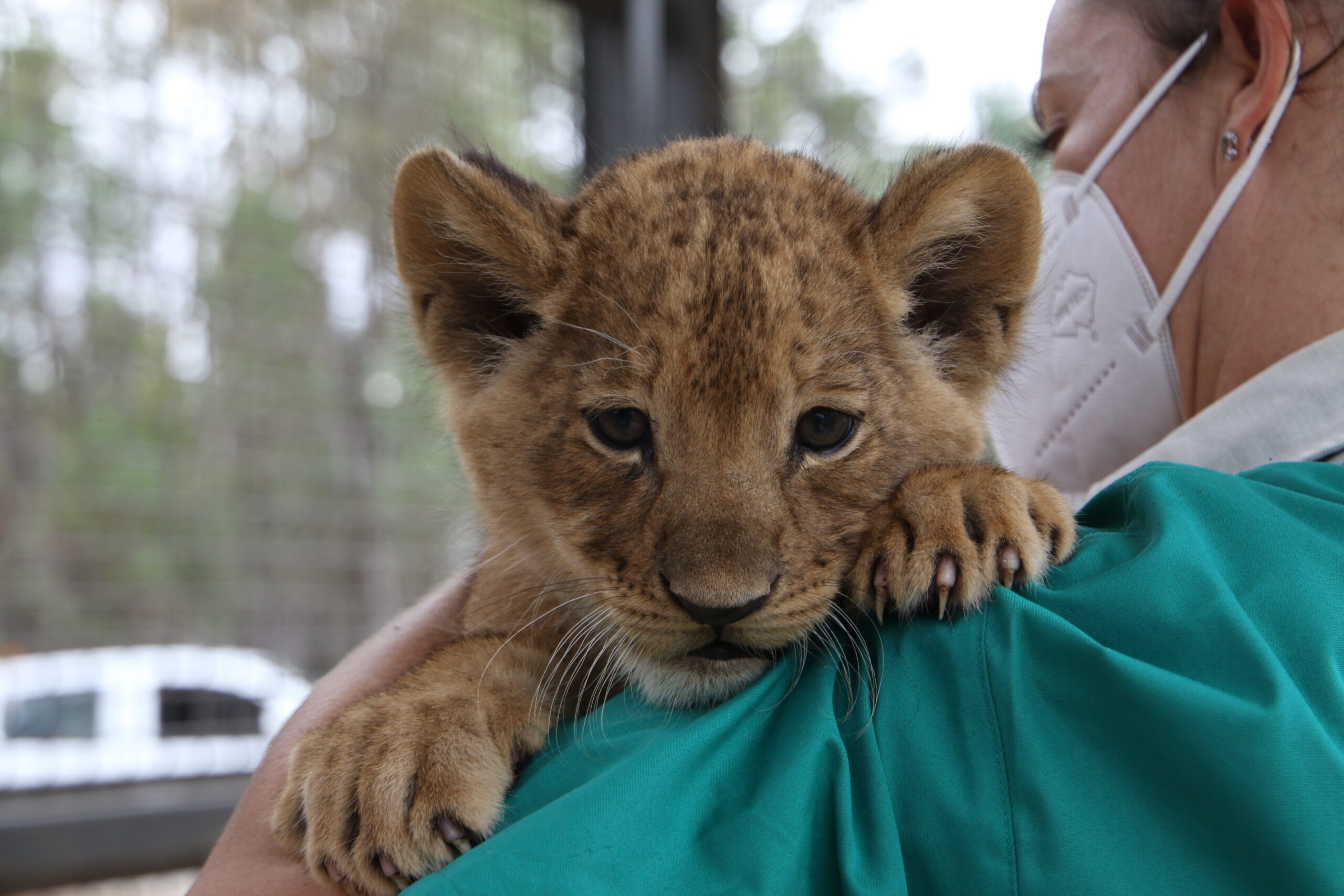
Four of Mogo Zoo’s tigers have undergone dental surgery via the generous support of Sydney’s Small Animal Specialist Hospital (SASH)
Mogo veterinarian Sam Young said canine fractures are the most common dental ailment in big cats in captivity, mostly because they can become aggressive at feed time and bite at the wire.
In older Sumatran tigers it is not unusual to see periodontal problems including tartar build-up, gingivitis, gingival recession, enamel chip fractures and crown fractures; particularly on incisors and premolars.
Young said Mogo tries to thwart dental problems through diet and preventative medicine.
“We try to feed all of the carnivores them as many whole pieces as possible, for example the tigers regularly receive half legs with hide and big bits of bone; something that provides a balanced diet and also requires the animals to chew vigorously to pull food apart,” she said. Continue reading Checking Mogo’s chompers – thanks to SASH
Posted on April 26th, 2013
Objective -To assess pregnancy and live foaling rates after reduction of twin pregnancy via transvaginal ultrasound-guided aspiration (TUA) in mares and evaluate effects of gestational period, localization of conceptuses, fluid aspiration volume, and combination of TUA with embryonic or fetal puncture on these outcomes. Design – Clinical trial. Animals – 44 mares pregnant with twins (25 . . . → Read More: Evaluation of pregnancy and foaling rates after reduction of twin pregnancy via transvaginal ultrasound-guided aspiration in mares
Posted on April 24th, 2013
A study conducted by the University of Melbourne’s Mackinnon Project that compared the controversial practice of mulesing with the use of breech clips, and applications of a long-acting insecticide to combat breech flystrike in sheep, has found that mulesing remains the most effective method.
The three-year study, which did not include animal welfare outcomes, was led by project director, and Australian Sheep Vet Society member, John Larsen, and involved more than 6000 sheep in three self-replacing merino flocks at Nareen, Ballarat and East Gippsland, in Victoria.
Publication of the results coincided with renewed pressure by animal welfare groups on the fashion industry, urging it to ban the use of mulesed wool in the manufacture of garments, and urging farmers to ban the practice of mulesing.
Although results are still being finalised, the study has shown that clips were less effective and cost-effective as had been hoped, and provided little protection from strike during spring and early summer. Animals that were treated with the insecticide Clik however, showed a similar or lower prevalence of flystrike to mulesed sheep during the pre-Christmas peak breech-strike period.
“There was no difference in the prevalence of breech strike between the mulesed and unmulesed groups but once the protection from the chemical expired after Christmas, the unmulesed sheep were at greater risk of breech strike compared to both the clipped and mulesed ones,” Larsen said.
While no farmer enjoys the “unpleaseant” task of mulesing Larsen said it was still an effective method, although he stressed breeding for less wrinkle and wool on the breech was clearly the way forward, and where the industry “should be going aggressively”. Continue reading Mulesing debate continues
Posted on April 22nd, 2013
Vomiting is a common presenting complaint in feline practice. This article differs from previous reviews in that it is an evidence-based review of the mechanisms, causes, investigation and management of vomiting in the domestic cat. Published evidence was reviewed, and then used to make recommendations for clinical assessment, diagnosis, antiemetic drug treatment, dietary management and monitoring of cats presenting . . . → Read More: Mechanisms, causes, investigation and management of vomiting disorders in cats: a literature review
|
|
|